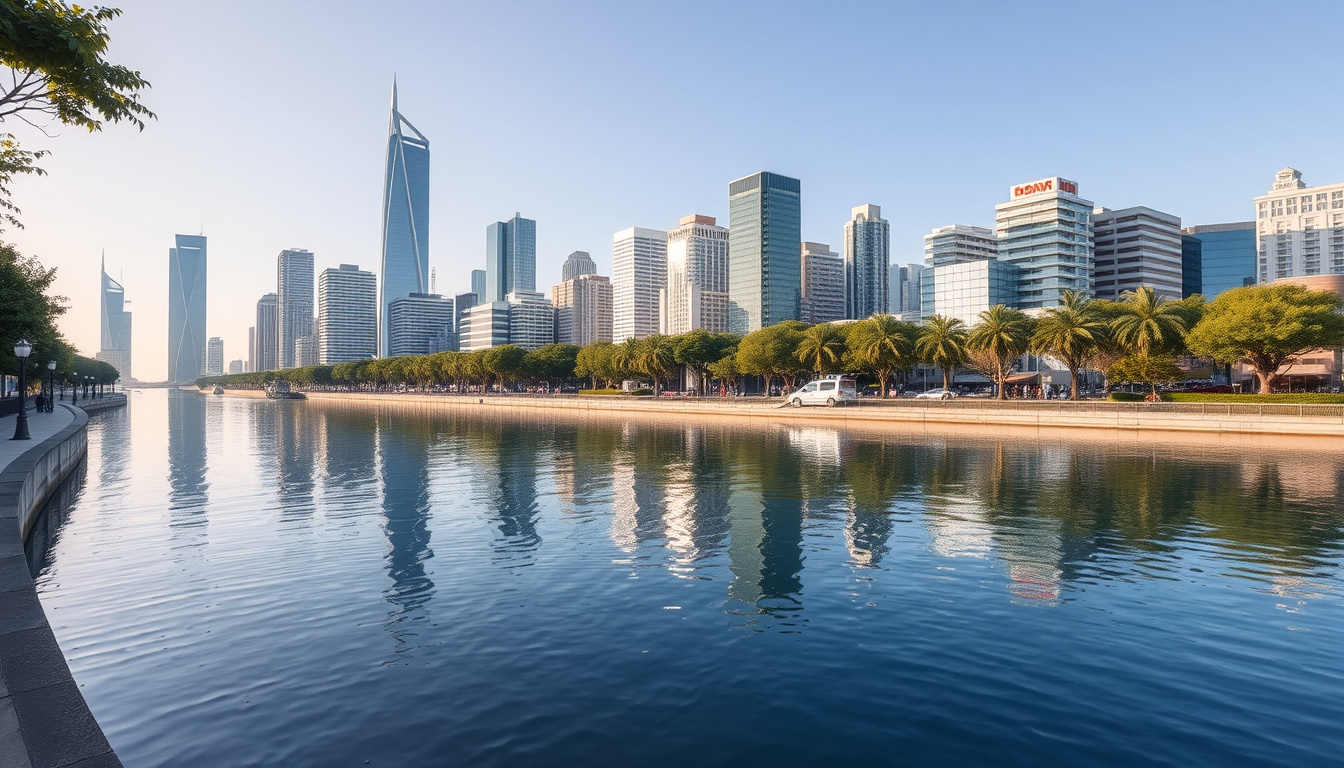

The term “blue space” refers to visible water features in urban environments—both natural and constructed—that are accessible to people. Rivers, lakes, canals, waterfronts, ponds, fountains, wetlands, and estuaries all fall under this category. Unlike green spaces, which emphasize vegetation, blue spaces center on water and its unique properties for cooling, purification, and human well-being. Researchers and urban planners increasingly recognize blue spaces as essential infrastructure for climate-resilient cities.
Interest in blue spaces has grown substantially since the early 2010s. Academic studies from 2011 to 2017 helped formalize definitions and document health connections, while recent work emphasizes blue spaces as nature-based solutions for climate adaptation. Cities worldwide are reconsidering their relationships with water, moving away from industrial-era practices that buried or polluted waterways toward designs that make water visible and accessible.
This guide examines what blue spaces are, why they matter, and how communities are implementing them to address contemporary urban challenges.
What Is Blue Space? Definition, Scope, and Key Characteristics
Blue space encompasses any visible water feature within or adjacent to urban areas that people can access either proximally—by being on or in the water—or distally—by viewing it. Researchers Grellier and colleagues defined blue space as “outdoor environments that prominently feature water and are accessible to humans either proximally or distally or virtually.” This broad definition accommodates everything from rivers and lakes to fountains and constructed wetlands.
Urban rivers, estuaries, mangroves, beaches, lakes, ponds, and coastal zones form the backbone of natural water accessibility in cities.
Waterfront parks, harbors, marinas, canals, fountains, constructed wetlands, and raingardens represent intentional human-designed water features.
Blue spaces operate at multiple scales—from street-level fountains to city-wide river restoration and riparian planting initiatives.
Modern approaches combine blue and green infrastructure for amplified benefits, treating water and vegetation as complementary systems.
Key Insights About Blue Spaces
- Blue spaces reduce urban heat island effects through cooling mechanisms that prove especially effective during warmer months.
- Proximity to water—whether swimming, boating, or walking along a waterfront—correlates with measurable improvements in mental and physical health.
- Urban planners increasingly treat blue spaces as infrastructure assets comparable to roads or utilities.
- The concept gained traction as a “new color” in environmental health discussions following academic work published after 2010.
- Combined blue-green spaces outperform either element alone for urban resilience and climate adaptation.
- Research from Völker and Kistemann in 2011 helped establish the scientific foundation for blue space health benefits.
- Access quality and surrounding amenities influence health outcomes as much as water presence itself.
Snapshot Facts
| Fact | Source | Impact |
|---|---|---|
| Blue spaces produce significant cooling effects compared to other urban sites during warm months | Healthy Cities Commission Toolkit | Climate regulation |
| Research formalized between 2011 and 2017 established blue space definitions and health connections | Völker & Kistemann 2011; Grellier 2017 | Academic credibility |
| Blue-green integration enhances biodiversity, cooling, and well-being beyond single-element approaches | Nuwao; NCBI | Planning methodology |
| Industrial-era waterfronts have been reversed through cleanup and public access initiatives | Simplicable Design | Historical transformation |
| Blue spaces improve quality of life and can generate monetizable ecosystem services | Nuwao; Simplicable | Economic value |
| Pollution, limited space, budget constraints, and policy barriers present implementation challenges | Nuwao; Green City Times | Planning obstacles |
| Community involvement and equity considerations shape successful blue space projects | Nuwao; Simplicable | Social dimension |
Health Benefits and Well-Being Impacts of Urban Blue Spaces
Research increasingly documents connections between blue space access and human health. Studies show that proximity to water—whether through direct physical contact or visual exposure—produces measurable benefits for mental and physical well-being. These effects parallel those documented for green spaces, though blue spaces offer distinct therapeutic elements related to water’s aesthetic and auditory qualities.
Mental and Physical Health Gains
Exposure to blue spaces correlates with reduced stress levels, improved mood, and enhanced cognitive function. Water sounds and visual movement provide sensory experiences that differ from vegetated environments. Research published through the National Institutes of Health indicates that both proximal access (being on or in the water) and distal access (viewing water from nearby) contribute to positive health outcomes.
Physical health benefits include increased opportunities for exercise through swimming, boating, fishing, and walking along waterfronts. Air quality improvements result from water’s capacity to filter pollutants, though these effects vary based on water quality and surrounding land uses. The University of Gloucestershire research emphasizes that quality, accessibility, and available amenities influence the magnitude of health benefits people experience.
Climate Regulation and Environmental Services
Blue spaces function as natural climate regulators within urban environments. Water bodies absorb heat during the day and release it gradually, moderating temperature extremes that characterize dense urban areas. This cooling effect proves particularly valuable during summer months when cities experience heat island intensification.
Stormwater management represents another critical function. Features like swales and raingardens slow runoff, filter pollutants, and reduce flooding risks. Constructed wetlands and natural estuaries provide additional purification services, improving water quality before it enters larger water systems. The Healthy Cities Commission documents how these features contribute to urban adaptation strategies for climate change.
Studies by Völker and Kistemann established that blue spaces demonstrate cooling effects compared to other urban sites. Ebi and Bowen (2023) noted that cities incorporating blue-green spaces adapt more effectively to climate change while enhancing biodiversity and well-being outcomes.
Biodiversity and Social Connection
Blue spaces create habitats for aquatic and riparian species, supporting urban biodiversity. Wetlands, estuaries, and vegetated riverbanks provide breeding grounds, food sources, and migration corridors for wildlife. These ecosystems also purify water and air, preventing environmental disturbances that would otherwise affect human health.
Social benefits extend beyond individual health improvements. Waterfront areas become gathering places that foster community connections. Shared waterfronts encourage interaction among diverse populations, strengthening social cohesion while providing economic opportunities through tourism, recreation, and property values. The Green City Times highlights how blue spaces address multiple urban challenges simultaneously.
Types and Examples of Blue Spaces
Blue spaces manifest across diverse forms, from naturally occurring water bodies to carefully engineered urban features. Understanding this variety helps planners and communities identify opportunities within their own contexts.
Natural Blue Space Examples
Natural blue spaces include features that existed before urban development or have been restored to more natural conditions. Urban rivers running through city centers represent one of the most common examples, with cities like Melbourne’s Yarra and Singapore’s Singapore River demonstrating successful restoration stories. Estuaries, particularly mangrove systems, provide critical ecological services while offering educational and recreational opportunities. Beaches, lakes, and coastal zones serve populations in waterfront cities worldwide.
The Scenic America organization documents how natural waterfronts contribute to community identity and economic vitality. These spaces often become focal points for urban development, attracting residents, businesses, and visitors who value water access.
Constructed and Engineered Blue Spaces
Man-made blue spaces respond to specific urban needs through intentional design. Waterfront parks transform former industrial ports into public amenities, as seen in cities like Barcelona and Copenhagen. Fountains and water features provide cooling and aesthetic benefits at street level. Constructed wetlands manage stormwater while creating habitat and recreational spaces.
Harbors and marinas balance commercial and recreational functions, maintaining water access while organizing maritime activities. Canals in cities like Amsterdam and Bangkok demonstrate how water-based transportation can coexist with residential and commercial development. The Healthy Cities Commission Toolkit provides guidance on integrating these features into comprehensive urban planning.
Blue spaces scale from street-level features like drinking fountains to city-wide initiatives such as river restoration. Starting with small interventions can build momentum for larger blue space projects while demonstrating benefits to communities and decision-makers.
Blue Space Versus Green Space: Understanding the Differences and Combined Benefits
While green spaces have long been recognized in urban planning, blue spaces represent a more recent conceptual addition. Understanding how these elements differ and complement each other helps planners design more effective urban environments. For those exploring urban green space initiatives, the integration of water features offers complementary benefits that enhance overall environmental performance.
| Aspect | Blue Space | Green Space |
|---|---|---|
| Primary Focus | Visible, accessible water bodies including rivers, ponds, and waterfronts | Vegetated areas including parks, trees, and green roofs |
| Key Functions | Cooling through water evaporation; water purification; climate adaptation | Air filtration; shade provision; biodiversity support |
| Therapeutic Element | Water visibility, sounds, and proximity provide unique calming effects | Vegetation, shade, and natural scents contribute to stress reduction |
| Combined Approach | Blue-green spaces integrate both elements for amplified benefits including enhanced biodiversity, superior cooling, and comprehensive well-being improvements | |
Research consistently demonstrates that blue-green spaces outperform either element in isolation. The Nuwao organization emphasizes that integrated approaches create synergistic effects greater than the sum of individual components. Water features adjacent to vegetation benefit from shade, reduced algae growth, and enhanced habitat complexity, while green spaces near water enjoy improved microclimate conditions and moisture retention.
Historical Development of Blue Space Planning
The concept of blue space has evolved alongside changing approaches to urban development. Understanding this history helps contextualize current practices and future directions.
- Industrial era waterfront development: Nineteenth and early twentieth century urbanization prioritized industrial access to water, often concreting over natural watercourses and restricting public waterfront access.
- Post-industrial reversal: Beginning in the mid-twentieth century, cities began reversing waterfront degradation, converting ports and industrial sites into public spaces.
- Academic formalization (2011-2017): Researchers including Völker and Kistemann (2011) and Grellier (2017) published foundational studies establishing blue space definitions and documenting health connections.
- Climate adaptation emphasis (2020-2023): Recent research increasingly positions blue spaces as nature-based solutions for climate resilience, with citations growing substantially.
- Multifunctional infrastructure approach: Current practice treats blue spaces as integrated components of urban systems, combining flood management, recreation, biodiversity, and climate adaptation functions.
The concept gained traction as a “new color” in environmental health discussions following academic work published after 2010. The University of Gloucestershire repository documents this evolution, noting how blue space research emerged as a complement to established green space studies.
What We Know Versus What Remains Unclear
While blue space research has advanced significantly, certain aspects remain better established than others. Honest assessment of this knowledge helps guide future research priorities and practical applications.
| Established Information | Areas of Uncertainty |
|---|---|
| Blue spaces produce measurable cooling effects during warm months compared to other urban sites | Specific temperature reduction metrics and optimal water-to-area ratios require further quantification |
| Both proximal (direct) and distal (viewing) access to blue spaces correlate with positive health outcomes | Relative contributions of different access types and required exposure durations need additional study |
| Combined blue-green spaces outperform single-element approaches for urban resilience | Optimal integration ratios and design configurations remain context-dependent and understudied |
| Pollution, limited space, budget constraints, and policy barriers commonly impede blue space implementation | Effective strategies for overcoming these barriers lack systematic comparison across different urban contexts |
| Research formalized between 2011 and 2017 established academic credibility for blue space concepts | Long-term health outcome studies following blue space exposure require longitudinal research designs |
| Blue spaces can generate monetizable ecosystem services and improve quality of life | Specific economic valuation methodologies for blue space benefits need refinement and standardization |
Why Blue Spaces Matter for Contemporary Cities
Blue spaces address multiple urban challenges simultaneously, making them valuable components of sustainable city planning. Climate change intensifies the relevance of water-based solutions, as cities seek to manage heat, flooding, and environmental degradation while improving quality of life for residents.
The economic dimension deserves particular attention. Blue spaces function as urban infrastructure comparable to parks or transportation networks. Property values near waterfronts consistently exceed comparable inland locations. Tourism and recreation industries benefit from maintained water access. Healthcare systems potentially reduce burdens when populations experience improved mental and physical health through blue space exposure.
Social equity considerations also favor blue space investment. Waterfront access historically concentrated among wealthier neighborhoods, a pattern that planning interventions can address. Equitable distribution of blue spaces ensures that benefits reach diverse communities rather than exacerbating existing disparities. The Green City Times emphasizes community involvement, particularly in Oceania, as essential for successful blue space projects.
Expert Perspectives and Research Citations
“Outdoor environments that prominently feature water and are accessible to humans either proximally, distally, or virtually.”
— Grellier et al. (2017), as cited in the Healthy Cities Commission Toolkit
“Cities with blue-green spaces adapt better to climate change, enhancing biodiversity and well-being.”
— Ebi & Bowen (2023), as documented by Nuwao
Primary research sources for blue space documentation include the Nuwao organization, the Healthy Cities Commission Toolkit, academic repositories at the University of Gloucestershire, and peer-reviewed publications available through the National Center for Biotechnology Information.
Looking Ahead: Trends and Future Directions
Blue space planning continues evolving as cities confront climate change, urbanization pressures, and demands for equitable public space. Several trends shape the future of blue space implementation worldwide.
Integration with green infrastructure represents a dominant trend. Permeable pavements, vegetated swales, and constructed wetlands combine water management with landscape amenities. Restoration projects targeting rivers, estuaries, and coastal zones prioritize ecological recovery alongside public access. Stakeholder collaboration ensures that projects reflect community needs while meeting technical requirements for climate resilience.
Sea-level rise and increasing flood risks drive investments in blue space infrastructure that can accommodate changing conditions. Flexible designs allow water features to expand and contract with climate variability. Retrofitting existing cities presents particular challenges, as land availability limits options, but innovative solutions emerge through above-ground features, rooftop water gardens, and underground storage systems.
For travelers interested in experiencing quality blue spaces, beachfront accommodations offer accessible options. The Hard Rock Bali beachfront resort and Peppers Palm Cove resort demonstrate how hospitality design incorporates waterfront access for visitor well-being.
Summary: The Growing Importance of Blue Spaces in Urban Planning
Blue spaces represent a distinct category of urban infrastructure centered on visible, accessible water features. Research since the early 2010s has established their contributions to climate regulation, health and well-being, biodiversity support, and economic value. Combined blue-green approaches consistently outperform single-element strategies, suggesting that integrated planning offers the most effective path forward for climate-resilient cities.
Frequently Asked Questions About Blue Spaces
What exactly qualifies as a blue space in urban planning?
Blue spaces include any visible water features accessible to people within urban environments. This encompasses natural features like rivers, lakes, estuaries, and beaches, as well as constructed elements such as fountains, canals, waterfront parks, and constructed wetlands.
How do blue spaces differ from green spaces?
Blue spaces focus on water features, emphasizing cooling, purification, and the therapeutic qualities of visible and accessible water. Green spaces center on vegetation for filtration, shade, and habitat. Both contribute to urban health, and research shows that combined blue-green spaces deliver superior outcomes compared to either element alone.
What health benefits are associated with blue space access?
Studies link blue space proximity to improved mental health, reduced stress, enhanced mood, and increased physical activity opportunities. Both direct access (being on or in water) and indirect access (viewing water) contribute to positive health outcomes, though quality, accessibility, and amenities influence the magnitude of benefits.
What challenges do cities face when implementing blue spaces?
Common obstacles include water pollution, limited available land in established cities, budget constraints, and policy barriers. Integrating indigenous practices and avoiding displacement of existing communities also require careful consideration during planning processes.
How do blue spaces help cities adapt to climate change?
Blue spaces regulate temperatures through cooling effects, manage stormwater through natural filtration and runoff slowing, and provide flood mitigation through features like wetlands and raingardens. Combined with green infrastructure, blue spaces form comprehensive climate adaptation systems.
What does the term “blue-green infrastructure” mean?
Blue-green infrastructure refers to urban systems that integrate water features with vegetation for enhanced environmental performance. These combined approaches create synergistic benefits for biodiversity, climate regulation, water management, and human well-being compared to single-element implementations.
Are there economic benefits to blue space development?
Blue spaces improve quality of life and can generate monetizable ecosystem services similar to parks and wetlands. Property values typically increase near waterfront areas, and tourism, recreation, and hospitality industries benefit from maintained water access.
What examples of successful blue space projects exist?
Notable examples include Melbourne’s Yarra River restoration, Singapore’s waterfront development, Barcelona’s waterfront parks, Copenhagen’s harbor areas, and Amsterdam’s canal system. These projects demonstrate various approaches to integrating blue spaces within urban environments.

Thomas Grant leads fact-checking, source verification and corrections at Australian News Desk.