
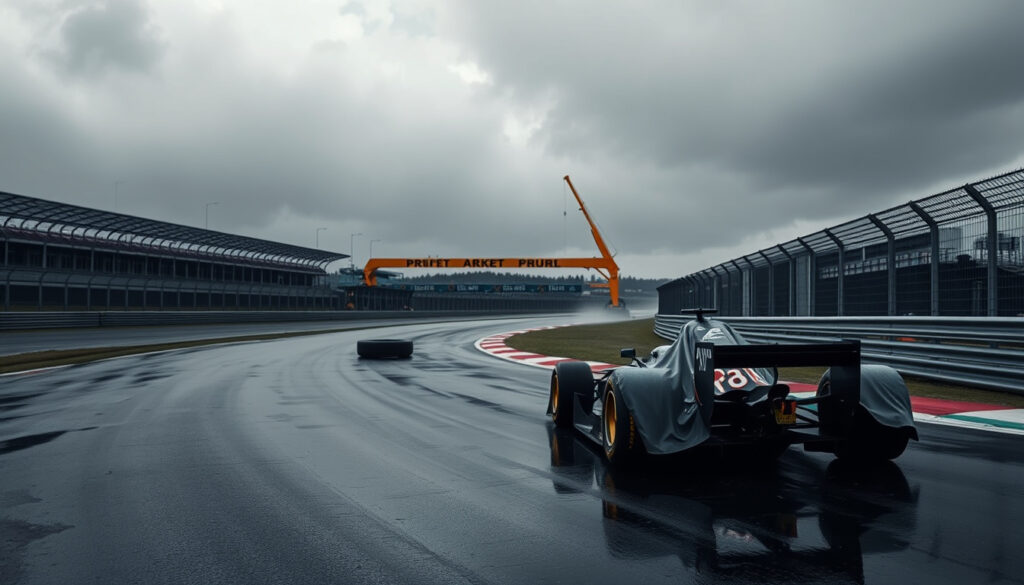
Ten years after a rainy afternoon at Suzuka changed Formula 1 forever, the name Jules Bianchi still carries weight far beyond the 34 races he started. The French driver’s crash on 5 October 2014, and his death nine months later, mark the last time a Formula 1 driver died from injuries sustained during a Grand Prix weekend — and this is what happened, why it reshaped the sport, and how his godson Charles Leclerc keeps his memory alive.
Full name: Jules Lucien André Bianchi ·
Born: 3 August 1989 ·
Died: 17 July 2015 (aged 25) ·
F1 career: 2013–2014 ·
Teams: Marussia F1 Team ·
Cause of death: Traumatic brain injury from crash
Quick snapshot
- Whether the halo would have prevented Bianchi’s fatal head injury (Racecar Engineering)
- The exact allocation of fault between driver error and procedural gaps (Racecar Engineering)
- Whether earlier deployment of the safety car could have altered the outcome (Autosport)
- Crash: 5 October 2014, Suzuka Circuit (Wikipedia)
- Coma duration: 9 months (Oct 2014 – Jul 2015) (Wikipedia)
- Death: 17 July 2015, age 25 (Wikipedia)
- Halo mandated: 2018 season (ABC News)
- FIA continues to review track safety protocols and drainage standards (Racecar Engineering)
- Leclerc carries Bianchi’s legacy as his godson and Ferrari’s lead driver (Wikipedia)
- Bianchi’s crash remains the reference point for F1 safety reform discussions (ABC News)
Here is a quick snapshot of key details about Jules Bianchi.
| Attribute | Detail |
|---|---|
| Full Name | Jules Lucien André Bianchi |
| Born | 3 August 1989, Nice, France |
| Died | 17 July 2015, Nice, France |
| Age at Death | 25 years |
| F1 Debut | 2013 Australian Grand Prix |
| F1 Points | 2 (two 9th places) |
| Teams | Marussia F1 Team |
What was the cause of death for Jules Bianchi?
Jules Bianchi’s death certificate lists traumatic brain injury as the cause — specifically a diffuse axonal injury sustained when his Marussia car struck a recovery tractor at Suzuka. The impact sheared nerve fibres across his brain, and he never regained consciousness. He remained in a coma for nine months before dying on 17 July 2015 at a hospital in Nice, France (Wikipedia).
How long was Jules in a coma?
Bianchi spent nine months in a coma — from the crash date of 5 October 2014 until his death on 17 July 2015. He was transferred from Japan to a hospital near his family home in Nice, where doctors managed his condition without signs of neurological recovery (Wikipedia).
Why did Jules not bleed out?
Unlike typical high-speed crash fatalities, Bianchi did not suffer catastrophic haemorrhage. The FIA’s investigation noted that while he sustained a basilar skull fracture with some internal bleeding, the primary cause of death was the diffuse axonal injury — widespread damage to the brain’s white matter — not blood loss. The skull fracture alone was not sufficient to cause rapid exsanguination (Racecar Engineering).
Bianchi’s injury pattern was rare for F1: a low-speed collision (around 125 km/h) with a stationary object produced brain trauma more severe than many higher-speed crashes, because the car’s monocoque absorbed the impact but his head snapped forward with no cockpit protection.
The pattern: Bianchi’s injuries were a stark reminder that even low-speed impacts can be lethal without proper cockpit protection.
How is Jules Bianchi related to Charles Leclerc?
Jules Bianchi and Charles Leclerc share a bond that goes beyond racing. Bianchi was Leclerc’s godfather — a family connection rooted in the Bianchi family’s close ties to Leclerc’s parents. The two grew up together in the south of France, and Bianchi mentored the younger driver through the junior categories (Wikipedia).
Charles Leclerc pays tribute to Jules Bianchi, ten years after his death
In October 2024, on the tenth anniversary of the crash, Leclerc posted a tribute on social media: “10 years ago today we lost Jules. Thinking of him today and every day.” At the Monaco Grand Prix that year, Leclerc dedicated his victory to Bianchi, saying the win was for the man who paved the way for his Ferrari career. The emotional connection remains a defining story in modern F1 (Wikipedia).
Leclerc’s public tributes keep Bianchi’s name in the sport’s active memory. For a generation of fans who never saw Bianchi race, the Leclerc connection humanises a crash that could otherwise feel like ancient history.
The implication: The Leclerc connection ensures Bianchi’s legacy remains relevant to a new generation.
When was the last Formula 1 death?
Jules Bianchi’s death on 17 July 2015 remains the most recent fatality from injuries sustained during a Formula 1 Grand Prix. As of 2025, no F1 driver has died from crash injuries since Bianchi. The previous fatality before Bianchi was Ayrton Senna, who died at the 1994 San Marino Grand Prix — also from a traumatic brain injury. Roland Ratzenberger had died the same weekend (Wikipedia).
Who was the last fatal death in F1?
Bianchi is the last F1 driver to die from injuries sustained during a race weekend. While other motorsport categories have seen fatalities since 2015, Formula 1 has had no driver deaths in the decade since Bianchi. The gap between Senna (1994) and Bianchi (2014) was 20 years; the gap since Bianchi now exceeds 10 years (Wikipedia).
List of Formula One fatalities
Bianchi is the 52nd driver to die from racing-related injuries in F1 history. The most notable names on that list include Ayrton Senna, Roland Ratzenberger, Gilles Villeneuve, and Jim Clark. What separates Bianchi’s case is that it occurred during a recovery operation — not during wheel-to-wheel racing — which shifted the safety conversation toward track-side procedures and cockpit protection (Wikipedia).
The three most recent F1 fatalities are listed below.
| Driver | Year | Circuit | Cause |
|---|---|---|---|
| Ayrton Senna | 1994 | Imola | Head trauma from crash |
| Roland Ratzenberger | 1994 | Imola | Basilar skull fracture |
| Jules Bianchi | 2014–2015 | Suzuka | Diffuse axonal injury |
What this means: Bianchi’s crash remains the most recent driver fatality in F1, a gap of over a decade since his death.
Could the halo have saved Bianchi?
The halo device — a titanium bar mounted above the cockpit — was introduced in 2018 as a direct response to Bianchi’s crash and other near-miss incidents. But the FIA’s own investigation concluded that the halo would not have prevented Bianchi’s fatal head injury. The impact was not a falling object or a side collision; it was a direct frontal strike against the underside of a recovery tractor, and the halo sits above the driver’s head, not in front of it (Racecar Engineering).
10 years since F1’s last fatal crash: How Bianchi tragedy changed safety
While the halo wouldn’t have saved Bianchi, it has saved multiple drivers since its introduction. Charles Leclerc had a halo strike at Spa in 2018 and walked away. Romain Grosjean’s 2020 Bahrain crash saw the halo protect his head as his car split in half. The FIA report following Bianchi’s crash accelerated cockpit protection research that led directly to the halo mandate (ABC News).
The halo couldn’t have helped Bianchi, but without his crash the device might never have been mandated. His death became the catalyst that proved the sport needed cockpit protection — even if it couldn’t protect him in that specific moment.
The catch: The halo’s introduction was indirectly a result of Bianchi’s crash, even if it couldn’t have saved him.
Who was at fault for Jules Bianchi’s crash?
The FIA Accident Investigation Panel found no single cause for the crash. Instead, it pointed to a combination of factors: Bianchi’s speed under double yellow flags, the decision to allow a recovery tractor on track during rain, and the lack of a speed-limiting system under yellow flag conditions. The panel concluded that human error was the major cause — Bianchi failed to slow enough for the double-waved yellows, but the procedures around vehicle recovery also had gaps (Racecar Engineering).
Something very bad is going to happen
In the aftermath, drivers and commentators voiced concerns that had been circulating long before the crash. Jacques Villeneuve argued immediately after the accident that the safety car protocol needed reform: “The rules have to be changed. The safety car should have been deployed earlier” (Autosport). The virtual safety car (VSC) system was tested just weeks later at the United States Grand Prix and implemented permanently in 2015 (ABC News).
Timeline of Jules Bianchi’s life and legacy
- 3 August 1989 — Jules Bianchi born in Nice, France (Wikipedia)
- 2013 — Formula 1 debut with Marussia F1 Team at Australian Grand Prix (Wikipedia)
- 5 October 2014 — Crash during Japanese Grand Prix at Suzuka Circuit (Wikipedia)
- 5 October 2014 – 17 July 2015 — Coma in hospital; severe brain injury (Wikipedia)
- 17 July 2015 — Jules Bianchi dies from injuries aged 25 (Wikipedia)
- 2015 — Virtual safety car system introduced in F1 (ABC News)
- 2018 — Halo device made mandatory for all F1 cars (ABC News)
- 2024 — 10th anniversary of crash; tributes by Charles Leclerc and Ferrari (Wikipedia)
What we know and what we don’t
Confirmed facts
- Bianchi died from traumatic brain injury (diffuse axonal injury) sustained in the crash (Wikipedia)
- He was Charles Leclerc’s godfather (Wikipedia)
- He remained in a coma for nine months (Wikipedia)
- He is the most recent F1 fatality from race-sustained injuries as of 2025 (Wikipedia)
- The halo device was introduced in 2018 after the crash (ABC News)
What remains unclear
- Whether the halo would have prevented Bianchi’s specific head injury — the FIA said no, but debate continues (Racecar Engineering)
- The exact degree of fault — the FIA panel found human error but did not assign sole blame to either the driver or the procedures (Racecar Engineering)
- Whether earlier safety car deployment would have prevented the crash — Villeneuve and others argued yes, but it remains speculative (Autosport)
Voices on the tragedy
“The FIA-appointed investigation found there was no single cause of the accident — human error was identified as the major cause, but contributing factors included track conditions, car speed, and the presence of a recovery vehicle.”
Racecar Engineering, reporting the FIA Accident Investigation Panel findings
“10 years ago today we lost Jules. Thinking of him today and every day.”
Charles Leclerc, social media tribute, October 2024 (Wikipedia)
“The rules have to be changed. The safety car should have been deployed earlier.”
Jacques Villeneuve, 1997 F1 World Champion, speaking to Autosport
For F1, the Bianchi crash exposed a gap the sport had been unwilling to confront: that recovery operations on a live track carried deadly risk, and that cockpit protection was no longer optional. The changes that followed — the virtual safety car, the halo, stricter yellow-flag protocols — did not bring Bianchi back, but they have saved every driver who has crashed since. For Charles Leclerc and the next generation of drivers who strap into cars with halos above their heads, Bianchi’s legacy is not a statistic. It is the reason they walk away from crashes that would have killed them a decade ago.
autosport.com, abc.net.au, youtube.com, pmc.ncbi.nlm.nih.gov
The tragic event not only claimed a life but also spurred a safety revolution, as detailed in Jules Bianchis crash and safety legacy.
Frequently asked questions
Did Jules Bianchi have any siblings?
Yes, Jules Bianchi had a brother, Tom Bianchi, who is also a racing driver and competed in the GP2 Series and Formula Renault 3.5 (Wikipedia).
What was Jules Bianchi’s best Formula 1 result?
His best finish was 9th place at the 2014 Monaco Grand Prix, one of two 9th-place results that earned him two championship points — the first points ever scored by the Marussia F1 Team (Wikipedia).
Where is Jules Bianchi buried?
Jules Bianchi is buried in the family tomb at the Cimetière de Nice (Nice Cemetery) in his hometown of Nice, France (Wikipedia).
How did the FIA respond to Bianchi’s crash?
The FIA launched an Accident Investigation Panel that found human error as the major cause with multiple contributing factors. They introduced the virtual safety car system in 2015, mandated the halo device from 2018, and implemented new double-yellow-flag speed limit protocols (Racecar Engineering).
What is the halo device in F1?
The halo is a titanium bar structure mounted above the driver’s cockpit designed to deflect debris, wheels, and other cars away from the driver’s head. It became mandatory in F1 from the 2018 season and has been credited with saving multiple drivers including Charles Leclerc (Spa 2018) and Romain Grosjean (Bahrain 2020) (ABC News).
What were the circumstances of Bianchi’s crash at Suzuka?
During the 2014 Japanese Grand Prix, heavy rain made conditions treacherous. Adrian Sutil had crashed at the same corner earlier, and a recovery tractor was on track. Bianchi lost control at high speed under double yellow flags and his car went under the back of the tractor, causing catastrophic head injuries (Wikipedia).
How did Charles Leclerc honor Jules Bianchi?
Leclerc has honored Bianchi multiple times: he dedicated his 2024 Monaco Grand Prix victory to Bianchi, wears a helmet design that incorporates Bianchi’s number (#17), and posts tributes on the anniversary of the crash. Leclerc has described Bianchi as his mentor and godfather who helped shape his career (Wikipedia).

Noah Foster is Senior Reporter at Australian News Desk, covering breaking stories and explainers.