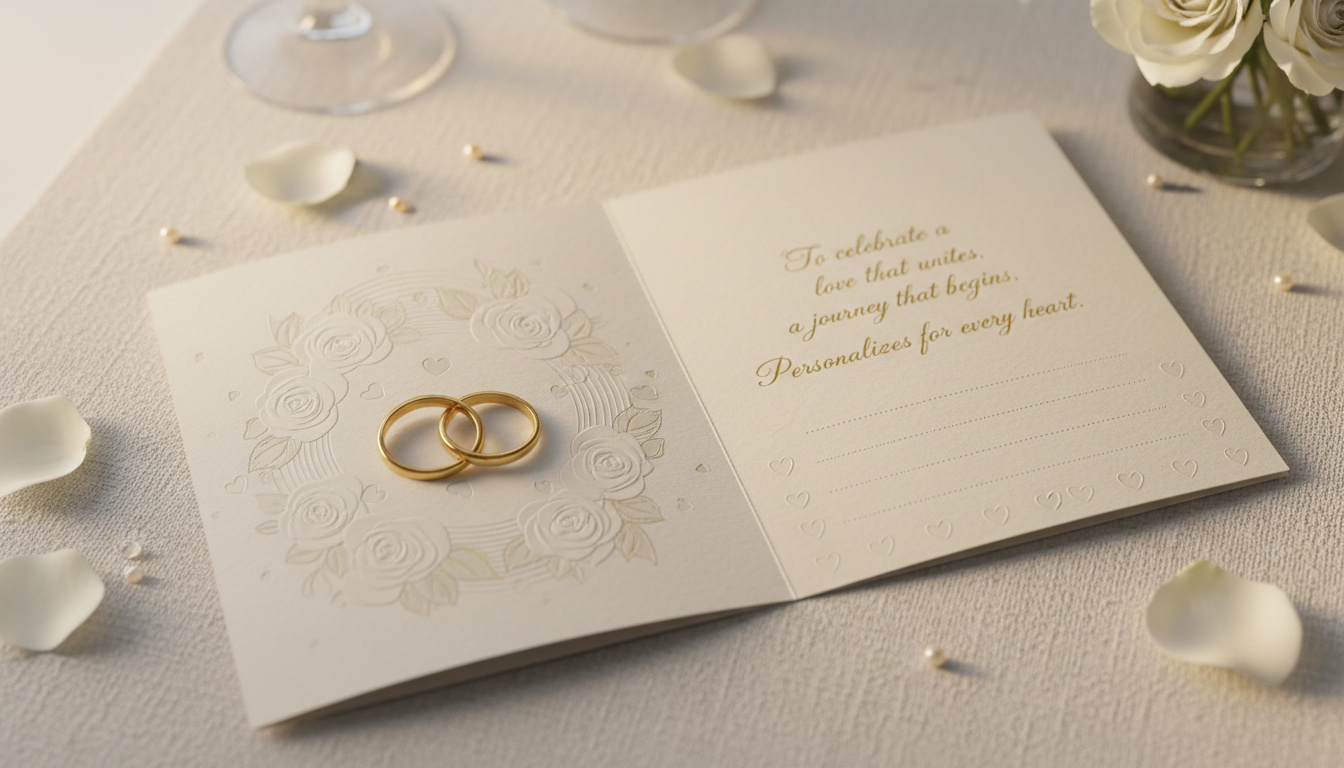

Finding the right words for a wedding card often generates more anxiety than selecting the gift itself. Whether celebrating childhood friends, siblings, or professional colleagues, the message inside that envelope carries emotional weight that outlasts the wedding day. Research indicates that effective wedding card messages typically range from 20 to 100 words—roughly one to four sentences—balancing brevity with genuine sentiment.
The most successful messages follow a three-part structure: opening congratulations, personalized wish or observation, and warm closing. Tone selection proves critical; humor that delights a sibling might discomfort a supervisor. Options span from secular, minimalist notes to elaborate religious blessings incorporating scripture.
This guide categorizes proven templates by relationship type and emotional tone, with specific examples attributed to etiquette experts and established wedding resources.
What to Write in a Wedding Card?
According to Darby House, effective wedding correspondence balances personalization with respect for the couple’s time. Messages should open with specific congratulations, offer a tailored wish, and conclude with a personal sign-off.
| Heartfelt | Funny | Religious | Short |
|---|---|---|---|
| “Wishing you a lifetime of happiness together.” | “May your love be like coffee – strong, comforting, and necessary for survival.” | “May God bless you on your wedding day and for many years to come.” | “Best wishes for a fun-filled future together.” |
- Start with specific congratulations rather than generic phrases
- Match emotional tone to your relationship proximity with the couple
- Limit length to 3-5 sentences for maximum impact
- Conclude with a personal sign-off including your full name
- Avoid offering unsolicited marriage advice or warnings
- Verify religious preferences before including Bible verses
- Reference shared memories only if appropriate for public reading
| Aspect | Do | Don’t |
|---|---|---|
| Length | Keep under 100 words | Write long paragraphs exceeding 5 sentences |
| Tone | Remain positive and future-focused | Mention past relationship difficulties |
| Opening | Lead with “Congratulations” or “We are thrilled” | Apologize for attendance unless absolutely necessary |
| Closing | Use “With love” or “Warmly” followed by name | End with impersonal “Best wishes” without signature |
| Religious Content | Include only if couple’s faith is known | Assume religious affiliation based on ceremony venue |
| Humor | Keep gentle and affectionate | Include embarrassing anecdotes or ex-partner references |
| Timing | Present at reception or mail to arrive before wedding | Send months after the ceremony date |
Wedding Card Messages by Relationship
Selecting appropriate wording depends heavily on your connection to the couple. Managing these different relationship tiers requires understanding distinct communication protocols, similar to navigating a Relationship Authorisation Manager guide requires knowledge of specific access levels.
For Friends
Close friends warrant enthusiastic, personal messages that acknowledge shared history. Jessa Little Creative recommends: “So excited to share the beginning of your forever. Wishing you joy!” This balances excitement with brevity suitable for the occasion.
For Sister or Brother
Family weddings invite deeper emotional resonance. Christianity.com suggests: “We are so honored to watch the two of you join together as one. God has His hand on each of you.” This acknowledges both the sibling bond and spiritual dimensions when appropriate.
For Colleagues
Workplace relationships demand professional boundaries while maintaining warmth. Hitched recommends: “Congratulations on your marriage! Wishing you all of God’s blessings and love’s joys.” This maintains appropriate formality without excessive familiarity.
When writing to a superior or subordinate, avoid references to workplace incidents, inside jokes, or professional grievances. Keep the focus entirely on their personal celebration rather than shared employment history.
Funny and Lighthearted Wedding Card Messages
Humor suits close friends and siblings who share your comedic sensibilities. Marriage.com notes that gentle teasing about married life’s realities can lighten the formality when the relationship supports it.
Consider the coffee metaphor: “May your love be like coffee – strong, comforting, and necessary for survival. Cheers to brewing a beautiful marriage!” For siblings, Marriage.com suggests: “They say marriage is a union of two forgivers. Get ready to become a forgiveness expert! Congratulations on your new degree.”
Calm.com offers a familial approach: “I hope your marriage is just like our Christmas dinner: silly, a little rowdy, and always full of great food. I mean, love. Full of love.” Ensure the couple possesses the humor required to appreciate such familiarity.
Heartfelt and Romantic Wedding Wishes
Family members and intimate friends deserve messages acknowledging the profound significance of marital commitment. These expressions emphasize emotional support and recognition of the couple’s unique bond.
The Knot provides several templates: “Seeing the love you share for each other fills me with so much happiness. I hope it only continues to grow!” Another option states: “You are a beautiful couple and will be a blessing to each other.”
For general couples, The Knot suggests: “You both deserve the very best and have found it in each other.” Jessa Little Creative adds: “Wishing you a marriage full of love, laughter, and joy (and maybe some patience thrown in for good luck!).”
When writing to a sister or brother, reference specific childhood memories or family traditions that highlight your shared history while welcoming the new spouse into your family’s narrative.
Phrases like “love is blind” or “ball and chain” undermine the celebration’s significance. Even in humorous cards, maintain respect for the commitment being made.
Religious and Specialized Wedding Card Messages
Faith-centered celebrations welcome spiritual blessings and scripture references. However, The Knot emphasizes the importance of confirming the couple appreciates religious content before including specific Bible verses.
Darby House suggests: “May God’s love be the glue that holds your marriage together.” For deeper spiritual context, Hitched recommends 1 Corinthians 13:4-13: “Love is patient, love is kind… Love never fails.”
Additional verses from And Hope Designs include 1 Peter 4:8 (“Above all, love each other deeply, because love covers over a multitude of sins”) and Ephesians 4:2 (“Be completely humble and gentle; be patient, bearing with one another in love”). The Knot also suggests the Irish Blessing: “May joy and peace surround you both… and God bless you evermore.”
For invitation-specific wording, Hitched recommends pairing logistical details with warm wishes: “Join us as we celebrate [Couple’s Names] on [Date]. Wishing you love and joy in your union.”
Common Confusions Clarified
Several distinctions prove consistently problematic for wedding card writers. Understanding these boundaries prevents social missteps.
| Established Information | Information That Remains Unclear |
|---|---|
| Congratulatory cards celebrate the marriage after engagement or ceremony | Whether to mention specific gift amounts inside the card |
| Religious verses require confirmed faith alignment | Exact length requirements for handwritten versus printed messages |
| Formal titles (Mr./Mrs.) suit professional relationships | How to address couples with different last names in formal contexts (varies by region) |
| Humor requires close relationship proximity | Whether to reference previous marriages or children from prior relationships |
Why Great Wedding Messages Matter
The written word carries permanence that spoken congratulations lack. A thoughtfully composed card becomes a keepsake the couple may revisit during challenging marital moments or anniversary celebrations. The Knot notes that personalized messages demonstrate the writer invested time in honoring the specific relationship rather than sending generic well-wishes.
Just as travelers consult Peppers Palm Cove reviews when selecting destination wedding venues, couples value authentic testimonials and emotional honesty in their wedding correspondence. The card serves as a tangible reminder of community support as they begin their shared life.
Expert Quotes & Inspirations
Wedding industry professionals emphasize authenticity over perfection.
“Two becoming one is a Divine miracle, and we are honored to watch you commit your lives to one another.”
— Christianity.com
“May this day mark the start of a life filled with love and contentment.”
— The Knot
Personalize Your Message
Ultimately, the most memorable wedding cards reflect genuine knowledge of the couple’s journey. Whether selecting humorous observations about their coffee addiction or offering scriptural blessings for their faith walk, specificity transforms standard templates into treasured communications. Consider the complete celebration experience, from venue details to the final toast, when crafting your unique contribution to their wedding day memories.
How do I choose between funny and heartfelt tones?
Assess your relationship depth. Close friends and siblings appreciate humor, while colleagues and distant relatives typically prefer sincere, straightforward congratulations.
Is it appropriate to mention the wedding gift in the card?
Briefly acknowledge the gift’s purpose without stating monetary values. For example, “We hope this small contribution helps build your dream home” suffices.
What if I don’t know one partner well?
Address the card to both using “and” rather than “to,” focusing on welcoming the new spouse into your circle rather than detailing personal history with the familiar partner.
Can I send a digital wedding card instead of paper?
Digital cards work for informal relationships or when distance prevents timely mail delivery, though traditional paper cards remain preferred for formal weddings and close family.
How do I address a same-sex couple in a wedding card?
Use the same conventions as opposite-sex couples: “Congratulations to you both,” or address the card to “The Grooms” or “The Brides” if referencing the couple collectively.
Should I mention deceased family members?
Only if the couple has previously acknowledged the absence or if you know they would appreciate the remembrance. Otherwise, keep the focus on the celebration.

Thomas Grant leads fact-checking, source verification and corrections at Australian News Desk.