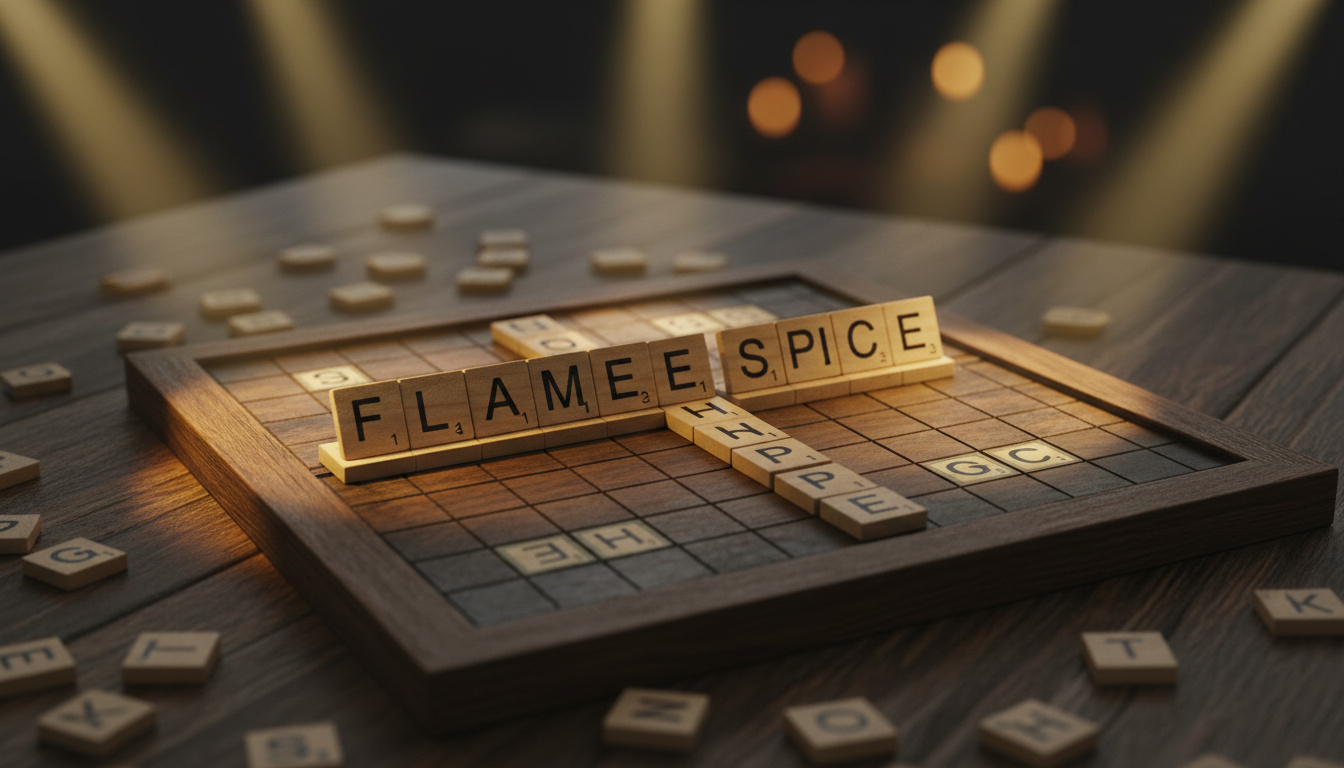
English dictionaries contain approximately 1,517 five-letter words ending in E, making this terminal pattern one of the most strategically significant categories for word games. These entries range from daily vocabulary like “house” and “smile” to obscure Scrabble-valid terms such as “jeuje” and “tazze.”
The dominance of the silent E pattern creates predictable structures that advantage puzzle solvers. Many follow the vowel-consonant-E formation, allowing players to test multiple letters simultaneously while narrowing solution spaces efficiently.
What Are Common 5 Letter Words Ending in E?
| Total Inventory ~1,517 valid entries |
Daily Usage abide, house, smile |
Game Frequency High vowel density aids Wordle |
Scrabble Value Averages 8-12 points |
- Vowel-heavy structures improve Wordle solve rates significantly
- Silent E patterns appear in approximately 40% of all entries
- High-value Scrabble words frequently incorporate J, Q, or Z tiles
- Dictionary sources vary between Scrabble-specific and standard English editions
- Wordle maintains a blocklist excluding over 80 valid dictionary words
- Regional spelling variants create international scoring discrepancies
- Terminal E allows efficient prefix substitution strategies in anagramming
| Category | Examples | Count | Notes |
|---|---|---|---|
| Common Daily Use | abide, house, smile | 500+ | High frequency written English |
| Wordle Starters | sable, sauce, crane | 100+ | Optimized for vowel coverage |
| Scrabble High Score | jeuje, tazze, kopje | 50+ | 18+ points using premium tiles |
| Rare/Obscure | abcee, agoge, albee | 200+ | Valid in tournament play |
| Verbs | glare, glide, write | 300+ | Action words ending in E |
| Adjectives | large, whole, white | 200+ | Descriptive modifiers |
| Never Wordle Solutions | abide, abode, above | 80+ | Valid words excluded from game |
| Regional Variants | metre, centre | 100+ | British vs. American spelling |
How Many 5 Letter Words End in E?
Aggregated word lists from Best Word List document approximately 1,517 five-letter words ending in E suitable for games like Scrabble and Wordle. This total encompasses entries from multiple dictionary editions, including both common vocabulary and tournament-approved obscure terms.
Merriam-Webster’s Word Finder and WordHippo provide substantial partial catalogs, though neither source claims absolute exhaustiveness. The variation between sources stems from different inclusion criteria—Scrabble dictionaries accept archaic and technical terms that standard collegiate dictionaries may omit.
Scrabble-approved lists include obscure entries like “agoge” and “bonze” that rarely appear in standard English references. Players should verify which dictionary authority governs their specific game or competition.
Counts derive from aggregated game-suitable word lists. Merriam-Webster and Oxford-aligned tools via WordHippo serve as primary verification sources for competitive play.
British and American English variants affect totals. Words like “metre” versus “meter” may count as distinct entries or duplicates depending on the dictionary edition used.
Best 5 Letter Words Ending in E for Wordle
Strategic Wordle play favors five-letter E-ending words containing high-frequency initial letters. ProWritingAid analysis identifies strong starters including “sable,” “sauce,” “saute,” and “crane” for their optimal vowel and consonant distribution.
However, Mental Floss documentation confirms that Wordle’s solution algorithm excludes numerous valid dictionary words. Common entries like “abide,” “abode,” “above,” “abuse,” and “adage” will never appear as daily solutions despite their validity in Scrabble and general English usage. Wedding Card Messages – Examples for Every Relationship demonstrates how such vocabulary filters affect linguistic applications beyond gaming.
Over 80 common five-letter E-ending words remain blocked from Wordle solutions, including “aware,” “awoke,” “eagle,” and “eerie.” Players should avoid these when guessing final answers despite their strategic value for letter elimination.
How Have Word Games Changed Word Lists?
- : Wordle launches, immediately popularizing systematic analysis of five-letter E-ending vocabulary
- : Players compile comprehensive databases of terminal-E words for strategic advantage
- : Scrabble tournament authorities update competitive word lists to include previously obscure five-letter terms
- : Major dictionaries expand digital Word Finder tools to accommodate game-specific queries
- : Advanced Wordle variants introduce specialized filters for high-scoring words ending in E
What Is Verified and What Remains Uncertain?
| Established Information | Information That Remains Unclear |
|---|---|
| Approximately 1,517 words end in E per Best Word List | Exact counts vary between Scrabble and collegiate dictionary editions |
| Merriam-Webster and WordHippo provide authoritative partial lists | Whether future Wordle updates will include currently excluded words |
| High-scoring words like “jeuje” (24 points) are tournament-valid | Regional acceptance of British variants in international competitions |
| Specific words including “abide” and “abode” are excluded from Wordle | The complete algorithmic criteria Wordle uses to blacklist valid words |
Why Do These Words Matter?
The silent E linguistic pattern carries significant educational and strategic weight. Byjus grammatical analysis demonstrates how this terminal letter modifies preceding vowel sounds, creating long vowel pronunciations in structures like “blame” and “glide.”
Beyond pedagogy, these words offer tactical advantages in constrained puzzle environments. Their predictable endings allow players to test multiple consonant combinations efficiently while the high vowel density maximizes information gain per guess.
The vocabulary also supports literacy development across age groups. FirstCry educational resources utilize these patterns for early reading instruction, while advanced players leverage them for competitive anagramming. Book Week 2024 – Dates, Theme, Parades and Resources highlights similar educational applications of structured vocabulary lists.
Where Do These Words Come From?
There are approximately 1,517 five-letter words ending in “E” in comprehensive English dictionaries, according to aggregated word lists suitable for games like Scrabble and Wordle.
Best Word List
Merriam-Webster’s Word Finder tool generates all 5-letter words ending in E, providing access to common entries alongside more obscure selections valid in tournament play.
Merriam-Webster
Prioritized by Scrabble scores using standard tile values, words like “jeuje” (24 points), “jeeze” (23 points), and “tazze” (23 points) represent the highest-value five-letter E-ending words available to competitive players.
Word Tips
What Should You Remember?
Approximately 1,517 five-letter words ending in E exist across English dictionaries, ranging from common vocabulary to high-scoring Scrabble entries like “jeuje.” While these words provide strategic advantages in Wordle and other puzzles, players must remember that many valid dictionary entries remain excluded from daily Wordle solutions, and regional spelling variations may affect competitive counts depending on the specific dictionary authority governing play.
Frequently Asked Questions
Are proper nouns allowed in these word lists?
Standard game dictionaries exclude proper nouns, place names, and capitalized words unless they have entered common usage as generic terms. All 1,517 listed words represent common nouns, verbs, or adjectives.
What is the highest possible Scrabble score?
“Jeuje” yields 24 points using standard tile values. “Jeeze” and “tazze” follow at 23 points each. These scores assume no premium square multipliers.
How can I use these words effectively in Wordle?
Focus on starters containing common letters like S, A, and T such as “sable” or “sauce.” Avoid words known to be excluded from solutions, including “abide” and “above.”
Why are some valid words excluded from Wordle solutions?
The game maintains a separate solution list that omits obscure, offensive, or potentially insensitive words despite their dictionary validity. Over 80 common E-ending words remain blocked.
Do British and American spellings differ in these counts?
Yes. Variants like “metre” versus “meter” may appear as separate entries in comprehensive lists or duplicates depending on the dictionary source used.

Thomas Grant leads fact-checking, source verification and corrections at Australian News Desk.