
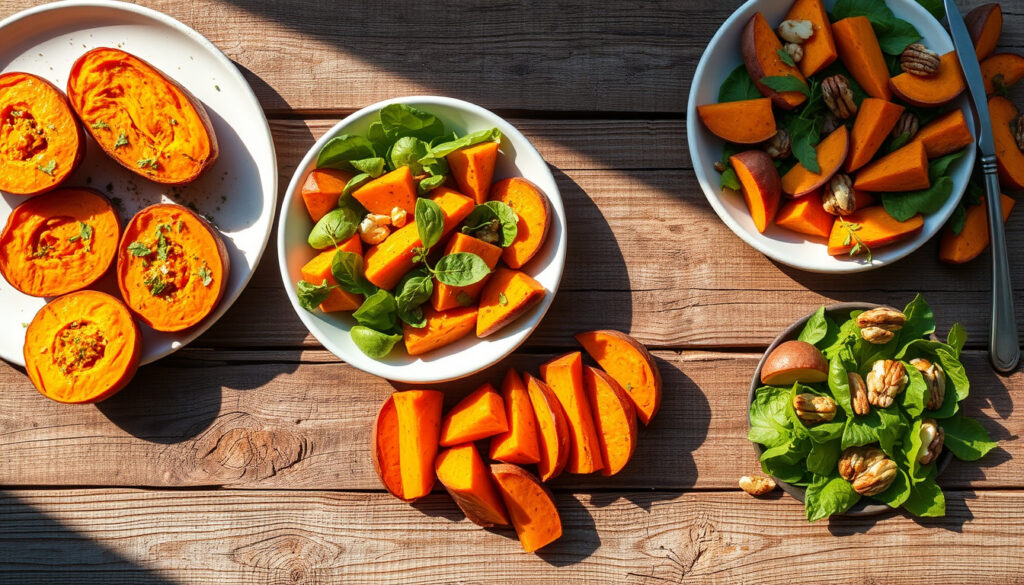
Sweet potatoes are more nutritious than most people realize. These vibrant tubers rank lower on the glycemic index than white potatoes, and when prepared with a few smart techniques, they can be a satisfying, diabetes-friendly addition to your plate.
GI Level: 44-61 (low to medium) ·
Vitamin A DV: 709% per medium potato ·
Fiber per 100g: 3g ·
Calories per 100g: 86 ·
Versatile Uses: Curries, fries, salads, mash
Quick snapshot
- Low GI verified by studies (Home Instead)
- Soaking removes excess starch for crispier results (Wholesome Yum)
- Pairing with fats slows carb digestion (Home Instead)
- Exact GI reduction from soaking—no clinical studies on blood sugar impact (Wholesome Yum)
- Precise portion sizes that work for all individuals vary (Marisa Moore Nutrition)
- Optimal soak duration beyond 30 minutes unverified (Wholesome Yum)
- Low-GI recipe awareness rose post-2010 diabetes education push (Marisa Moore Nutrition)
- ADA recipes remain current with no specific publication dates (American Diabetes Association)
- Contemporary recipes dominate; no historical timeline applies (American Diabetes Association)
- Try roasting at 400–425°F with oil toss (Home Instead)
- Experiment with chickpea and vegetable bowls (Type 2 Diabetes Revolution)
- Incorporate soaking into your prep routine (Wholesome Yum)
These nutrition highlights explain why sweet potatoes deserve a spot in diabetes-friendly meal planning. The key facts table below breaks down each benefit with practical context.
| Nutrient | Value | Why it matters |
|---|---|---|
| Low GI | 44-61 | Supports stable blood sugar |
| Vitamin A | Over 700% DV | Immune and eye health |
| Carbs per medium potato | 27g | Equals 2 carb servings for diabetes management |
| Fiber | 3g per 100g | Aids digestion and satiety |
| Prep Tip | Soak for crispiness | Removes excess surface starch |
| Pairing Star | Chickpeas, chicken | Protein balances glucose response |
What is the most delicious way to cook sweet potatoes?
Roasting brings out the natural sugars in sweet potatoes, creating caramelized edges that beat boiling or microwaving every time. According to Marisa Moore Nutrition (registered dietitian nutritionist), the dry heat of roasting concentrates flavors more effectively than other methods. The result is a side dish with depth that pairs equally well with weeknight chicken or holiday spreads.
Roasting for caramelized flavor
Toss cubed sweet potatoes in olive oil, season simply, and roast at 425°F for 25–30 minutes until golden and tender. The Home Instead (diabetes care guidance) recipe calls for that exact temperature, and adding roasted garlic brings mellow sweetness without refined sugars. For crispier results, spread in a single layer on the baking sheet—crowding causes steaming and soft texture instead of caramelization.
Baking whole potatoes
Piercing whole sweet potatoes with a fork before baking allows steam to escape, preventing burst skins. The Hangry Woman (diabetes-focused recipe developer) recommends 400°F for 50–60 minutes for fully cooked, scoopable potatoes. This method works well for stuffed preparations like taco boats or soufflé bases.
Air fryer sweet potato fries
The American Diabetes Association (official health organization) offers a diabetes-friendly fry recipe that uses 400°F after an oil toss—no deep frying required. Slice uniforms, pat dry, and air fry until crispy on the outside while keeping the inside soft.
The implication: Roasting delivers both flavor and texture that simpler cooking methods cannot match, making it the most versatile technique for anyone who wants sweet potatoes that actually taste great.
What is the best way to cook sweet potatoes for diabetics?
The glycemic index shifts depending on cooking method, and those differences matter when you are managing blood sugar. Marisa Moore Nutrition confirms that boiling actually lowers GI more than roasting or baking, but roasting remains suitable with portion control. The key is pairing your sweet potato with fat or protein to further blunt the glucose spike.
Low-GI roasting techniques
Keep portions moderate (about half a medium potato per serving) and always add a healthy fat source. Home Instead (diabetes care guidance) emphasizes using butter or olive oil not just for flavor but for blood sugar stabilization—the fats slow carbohydrate digestion. Skip the brown sugar glazes; instead, boost sweetness naturally with cinnamon or roasted garlic.
Baked with garlic butter
Roasted Garlic Butter Sweet Potatoes use Home Instead’s technique of tossing cubed potatoes in oil and roasted garlic, then baking at 425°F for 30–35 minutes. The fat coating does double duty: it crisps the exterior while moderating the internal glucose impact. One medium sweet potato delivers 27g of carbohydrates—equivalent to two carb servings—making portion awareness essential.
Pairing with fiber-rich foods
Home Instead’s diabetes tips include pairing sweet potatoes with non-starchy vegetables like broccoli to add fiber that further blunts glucose spikes. The American Diabetes Association’s soufflé recipe balances the starch with walnut flax topping, delivering crunch and healthy fats in every bite.
What this means: You do not have to eliminate sweet potatoes entirely—just control portions and always add fat or protein to round out the meal.
Adding 2 tablespoons of olive oil or a serving of chickpeas to a medium sweet potato meaningfully reduces its blood sugar impact compared to eating the potato alone. For people monitoring glucose, pairing is not optional—it is the difference between a safe carb choice and a spike.
What goes well with sweet potatoes?
Sweet potatoes play well with both plant-based and animal proteins, making them unusually flexible for diabetic-friendly menus. The Type 2 Diabetes Revolution (diabetes recipe resource) showcases combinations that add flavor, protein, and healthy fats without piling on refined carbohydrates. Whether you are building a vegetarian bowl or a hearty dinner, sweet potatoes adapt without drama.
Chickpeas for protein boost
The Sweet Potato Chickpea Bowl roasts at 400°F for 20–25 minutes, combining the potatoes with Brussels sprouts and chickpeas for a complete meal. Type 2 Diabetes Revolution adds hummus dressing (thinned with water) for creaminess without extra carbs, and pumpkin seeds or avocado for satiating fats. Harissa spice brings heat without sugar, keeping the dish firmly within diabetic-friendly parameters.
Chicken for dinner mains
Lean ground beef in the Hangry Woman (diabetes-focused recipe developer) taco boats recipe (1 lb / 450g beef per batch) slows carb absorption due to protein content. Stuffing baked sweet potato halves with seasoned beef, toppings like salsa and Greek yogurt creates a balanced plate where the protein balances the starch.
Vegetarian salads
Roasted sweet potato cubes tossed into salads with leafy greens, cranberries, and a light vinaigrette create satisfying meals. The fiber from both the greens and the sweet potato keeps glucose steady while the contrast of warm and cold textures makes even simple salads feel intentional.
The catch: Sweet potatoes shine as a base, but skipping the protein or fat pairing turns them into a glucose liability—even in “healthy” recipes.
Why do you need to soak sweet potatoes before cooking?
Soaking removes excess surface starch, which is the secret behind restaurant-quality crispy roasted sweet potatoes. Wholesome Yum (low-carb recipe developer) recommends submerging cubed sweet potatoes in cold water for 30 minutes before roasting—no special equipment needed.
Reduces starch for crispier fries
The starch on the surface of cut sweet potato pieces creates a gummy coating when roasted without soaking. By soaking, you wash away that starch layer, leaving a cleaner surface that caramelizes and crisps. For fries specifically, this difference is night and day: soaked and roasted fries develop golden edges, while unsoaked fries turn out pale and soft.
Improves texture in baking
Even for whole baked potatoes, a brief soak (30 minutes) followed by thorough drying helps the skin crisp better in the oven. Pat completely dry before baking to avoid steaming, which defeats the purpose of the soaking step.
Step-by-step soaking method
- Peel or cube sweet potatoes as desired
- Submerge in cold water for 30 minutes (overnight works too)
- Drain and pat completely dry with clean towels
- Proceed with your recipe—toss in oil, season, and roast
Cooks who invest the 30-minute soak gain noticeably crispier results and may experience a modest reduction in rapid glucose absorption from surface starch removal.
Can sweet potatoes help with diabetes?
Sweet potatoes offer genuine nutritional advantages for blood sugar management when prepared thoughtfully. The American Diabetes Association (official health authority) cites vitamin A, fiber, and vitamin C as key benefits, and their official recipes demonstrate that sweet potatoes can fit into diabetic meal plans. The catch is that preparation method and portion size determine whether they are helpful or harmful. Other functional foods like Lions Mane Mushroom also support metabolic health through different mechanisms.
Nutritional profile for blood sugar
A medium sweet potato provides over 700% of the daily value for vitamin A (from beta-carotene), 3g of fiber per 100g, and a lower glycemic impact than white potatoes. Marisa Moore Nutrition notes that the fiber aids digestion, increases satiety, and slows glucose release into the bloodstream. This combination makes sweet potatoes more forgiving than most starchy sides—but only if you do not slather them in butter and brown sugar.
Recipe adaptations
The American Diabetes Association’s soufflé recipe uses Splenda Brown Sugar Blend instead of regular sugar, keeping the dish sweet while reducing carbohydrate content. Cinnamon Roasted Sweet Potatoes (roasted at 450°F per Flawed Yet Functional) rely on cinnamon for natural sweetness without added sugars. These adaptations show that you can enjoy sweet potatoes without the blood sugar consequences of traditional dessert preparations.
Evidence from health sources
The Home Instead diabetes care guide confirms that sweet potatoes have a slower impact on blood sugar compared to other starchy sides when prepared with attention to portion and pairing. Hangry Woman adds that sweet potatoes are high in fiber, beta-carotene, and vitamin C—nutrients that support overall metabolic health beyond just glucose control.
Why this matters: Sweet potatoes are not a free pass, but they are a better choice than white potatoes or rice when you follow the preparation rules—portion control, fat/protein pairing, and avoiding sugary additions.
Diabetes-friendly tips from health sources consistently emphasize portion control, adding fiber-rich vegetables, and using herbs instead of sweeteners—the sweet potato itself is not the problem; it is the preparation choices around it.
How to roast sweet potatoes for blood sugar control
Four approaches stand out for diabetes-friendly sweet potato preparation, ranging from simple weeknight sides to weekend project recipes.
- Garlic butter roasted cubes — Toss cubed sweet potatoes (chopped uniform for even cooking) in olive oil and roasted garlic. Roast at 425°F for 25–30 minutes, flipping halfway. Spread in single layer; do not crowd the pan.
- Soaked crispy fries — Soak cubed sweet potatoes in cold water 30 minutes, pat dry, toss in oil with salt and paprika. Roast at 400°F for 20–25 minutes, flipping once, until golden and crisp.
- Chickpea power bowl — Cube and roast sweet potatoes at 400°F for 20–25 minutes alongside chickpeas and Brussels sprouts. Drizzle with thinned hummus and top with pumpkin seeds or avocado.
- Stuffed taco boats — Bake whole pierced sweet potatoes at 400°F for 50–60 minutes until tender. Split, fill with seasoned lean ground beef, and top with salsa and Greek yogurt.
What we know vs. what remains uncertain
Confirmed
- Sweet potatoes have lower GI than white potatoes
- Soaking removes starch and improves crispiness
- Pairing with fat stabilizes blood sugar response
- Portion control is essential (27g carbs per medium potato)
- Roasting at 400–425°F yields consistent results
Uncertain
- Exact GI reduction from soaking—no clinical studies on blood sugar impact
- Optimal soak duration beyond 30 minutes unverified
- Whether soaking meaningfully affects glucose spikes in practice
What the experts say
Boiling sweet potatoes helps lower the glycemic index while roasting and baking sweet potatoes pushes the number higher.
— Marisa Moore, Registered Dietitian Nutritionist
If you have time, soak the sweet potato cubes in cold water for 30 minutes before roasting. This step removes excess starch and makes your roasted sweet potatoes more crispy.
— Wholesome Yum, Low-Carb Recipe Developer
Sweet potatoes have a slower impact on blood sugar compared to other starchy sides.
— Home Instead, Diabetes Care Provider
For anyone managing blood sugar, the choice is clear: embrace the sweet potato, but on your own terms—controlled portions, always paired with protein or fat, and roasted to bring out the flavor without the glycemic shortcuts that undo your efforts.
Related reading: White Elephant Cafe Margaret River: Menu, Hours, Dog Friendly
For crispy diabetic-friendly sweet potatoes without excess oil, the air fryer sweet potato guide pairs perfectly with chickpea or chicken dishes in under 30 minutes.
Frequently asked questions
Do sweet potato leaves help with anemia?
Sweet potato leaves are nutritious and contain iron and folate, which support blood health, but they are not a primary focus of mainstream diabetic recipe collections. Most recipes use the tuber itself rather than the greens.
Do sweet potatoes and chickpeas go together?
Yes—they are a natural pairing. Chickpeas add plant-based protein and fiber that blunt glucose spikes, while sweet potatoes provide complex carbohydrates and beta-carotene. Recipes like the Sweet Potato Chickpea Bowl at 400°F demonstrate this combination works well.
What foods raise hemoglobin quickly?
Iron-rich foods like lean meats, beans, spinach, and fortified cereals support hemoglobin production. Sweet potatoes contribute beta-carotene and vitamin C (which aids iron absorption), but they are not a primary iron source on their own.
When should you not eat sweet potatoes?
If your healthcare provider has advised strict carbohydrate monitoring or you are experiencing blood sugar spikes from current portions, work with a dietitian to determine appropriate serving sizes before adding sweet potatoes to your meals.
What are Indian sweet potato recipes?
Indian-style preparations often include spices like turmeric, cumin, and coriander. Popular versions include spiced sweet potato curries, roasted chaat-style cubes with chaat masala, and mashed preparations with ginger and green chili.
What are sweet potato recipes for babies?
Steamed or mashed sweet potatoes make excellent first foods for infants—soft, naturally sweet, and packed with vitamin A. Avoid adding salt or sugar; instead, mix with breast milk or formula for familiar taste and smooth texture.
What is the #1 worst food for your blood sugar?
Refined carbohydrates like white bread, sugary drinks, and candy cause the most rapid blood sugar spikes. Whole grains, legumes, and properly prepared vegetables like sweet potatoes rank far lower on the glycemic impact scale.

Thomas Grant leads fact-checking, source verification and corrections at Australian News Desk.