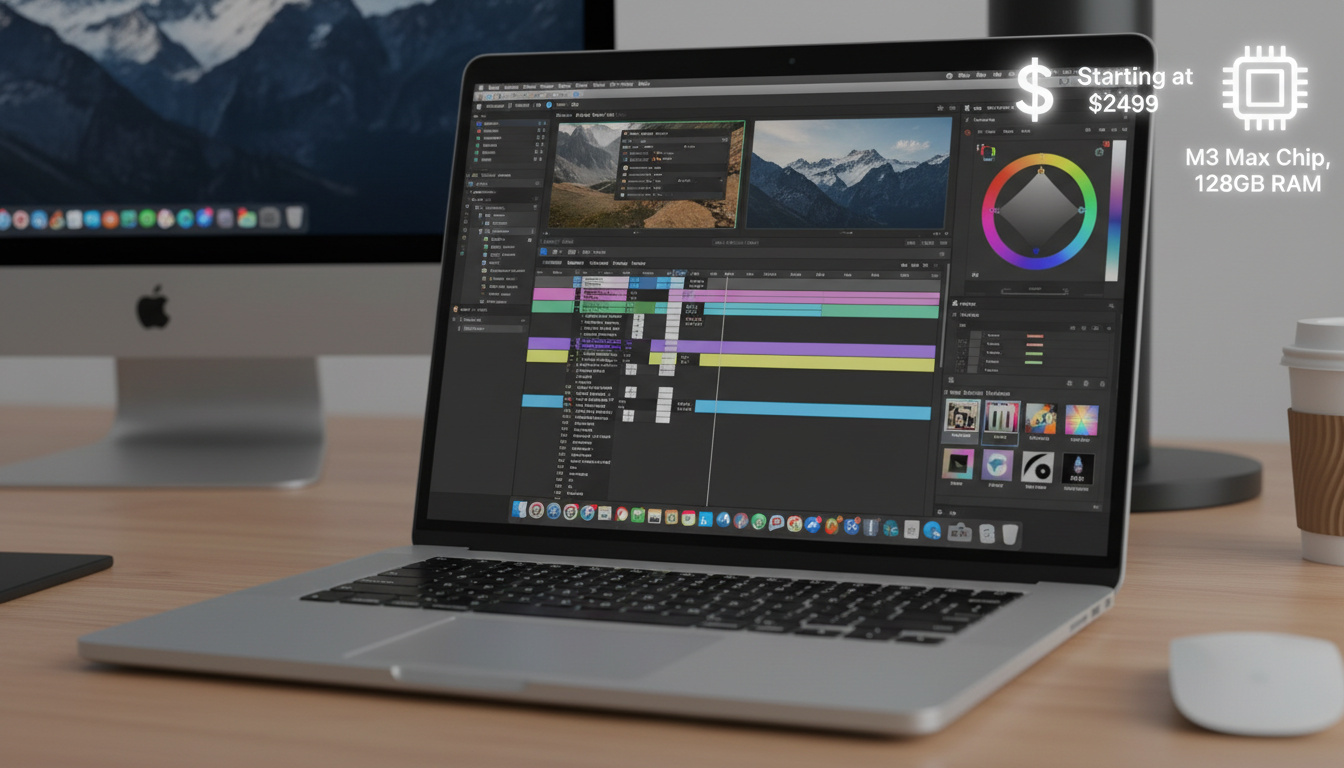

Final Cut Pro stands as Apple’s flagship professional video editing application, exclusively engineered for macOS and iPadOS devices. The software commands a significant position in post-production workflows, offering a one-time purchase model at $299.99 alongside a subscription alternative through Apple Creator Studio at $12.99 monthly.
Since its controversial relaunch as Final Cut Pro X in 2011, the platform has evolved into a sophisticated ecosystem optimized for Apple Silicon processors. Unlike competitors embracing cross-platform availability, Final Cut Pro maintains strict hardware exclusivity, leveraging tight integration with Mac architecture to deliver accelerated rendering and real-time playback performance.
Professional editors and content creators increasingly weigh this specialized tool against alternatives like Adobe Premiere Pro and DaVinci Resolve, evaluating whether its closed-ecosystem advantages justify the investment against more flexible, often cheaper competitors.
What is Final Cut Pro?
Final Cut Pro represents Apple’s professional-grade nonlinear video editing solution, distinguished by its proprietary Magnetic Timeline interface and deep hardware optimization. The application serves filmmakers, broadcast professionals, and content creators requiring advanced color grading, multicam editing, and 8K video support within the Apple ecosystem.
Automatic clip adjustment
Hardware acceleration
Future-ready resolution
Built-in effects suite
The software’s architecture prioritizes workflow efficiency through several defining characteristics:
- Perpetual licensing model with included feature updates
- Exclusive compatibility with macOS and iPadOS platforms
- Streamlined rendering via Apple Silicon chip integration
- Automated timeline management through Magnetic Timeline technology
- Collaborative limitations requiring third-party plugins for team workflows
| Attribute | Specification |
|---|---|
| Developer | Apple Inc. |
| Initial Release | 2011 (Final Cut Pro X) |
| Standard Price | $299.99 (one-time) |
| Subscription Alternative | $12.99/month (Creator Studio) |
| Supported Platforms | macOS, iPadOS |
| Free Trial Period | 30 days |
| Current Version | 10.7+ (2024) |
| Education Pricing | $2.99/month |
Final Cut Pro Pricing and How to Get It
Apple structures Final Cut Pro pricing around two distinct models, accommodating both perpetual license holders and subscription-oriented users. The standard one-time purchase of $299.99 grants indefinite access with complimentary feature updates, positioning the software as a long-term investment rather than recurring overhead.
How much does Final Cut Pro cost?
The application retails at $299.99 for a perpetual license through the Mac App Store. Alternatively, Apple Creator Studio bundles Final Cut Pro with Logic Pro, Pixelmator Pro, Motion, Compressor, and additional creative applications for $12.99 monthly or $129 annually.
Is Final Cut Pro free?
No permanent free version exists. However, Apple offers a 30-day free trial of the Creator Studio subscription, providing full access to evaluate features before financial commitment.
Students and verified educators qualify for substantially reduced rates at $2.99 monthly or $29.99 annually through the Creator Studio education tier. This represents an 80% discount from standard subscription pricing and requires validation through Apple’s education portal.
Where to download Final Cut Pro
Final Cut Pro distributes exclusively through the Mac App Store for macOS and the App Store for iPad. Users must maintain active Apple IDs and meet system requirements before installation. The one-time purchase remains available alongside subscription options, with no external distribution channels authorized by Apple.
Final Cut Pro vs Competitors Like Premiere Pro
Professional editors frequently evaluate Final Cut Pro against Adobe Premiere Pro and DaVinci Resolve, with each platform presenting distinct philosophical approaches to post-production workflow and pricing structures.
Adobe Premiere Pro comparison
Premiere Pro operates exclusively through Adobe Creative Cloud subscriptions, requiring ongoing payments without a perpetual license option. While Premiere offers superior cross-platform collaboration features and seamless After Effects integration, Final Cut Pro demands plugins for equivalent team coordination capabilities. Premiere targets users already invested in Adobe’s broader ecosystem, whereas Final Cut prioritizes standalone performance within macOS environments.
DaVinci Resolve comparison
DaVinci Resolve presents the most aggressive competitive threat, offering a robust free version containing approximately 90% of Studio functionality, including 4K export without watermarks. The paid Studio license costs $295, comparable to Final Cut Pro’s perpetual pricing. Resolve specializes in advanced color grading with superior toolsets compared to Final Cut Pro, alongside real-time multi-user collaboration and integrated Fairlight audio editing. Cross-platform availability across macOS, Windows, and Linux further extends Resolve’s accessibility beyond Apple’s hardware constraints.
iMovie upgrade considerations
For users transitioning from iMovie, Final Cut Pro represents a natural progression within Apple’s creative hierarchy, maintaining interface familiarity while introducing professional-grade tools. The Magnetic Timeline diverges significantly from iMovie’s track-based approach, potentially requiring adjustment periods for novice editors. Performance optimization remains superior in Final Cut Pro, particularly for Apple Silicon Macs handling complex projects.
Final Cut Pro System Requirements and Compatibility
Final Cut Pro’s exclusivity to Apple hardware creates specific technical boundaries that prospective users must navigate before installation.
Does Final Cut Pro work on Windows?
Final Cut Pro remains unavailable for Windows operating systems. The software codebase targets macOS frameworks and Metal graphics APIs specifically, with no ports or emulation support officially sanctioned by Apple. Windows users seeking comparable functionality must adopt alternatives like DaVinci Resolve or Adobe Premiere Pro.
Final Cut Pro functions exclusively on macOS and iPadOS devices. Attempting installation on Windows or Linux systems proves impossible through official channels, and Apple maintains no announced development roadmap for cross-platform expansion.
Mac hardware requirements
Current versions require macOS 15.6 or later, with 8GB system memory minimum and 16GB recommended for professional workflows. Intel-based Macs demand Metal-capable graphics cards, while Apple Silicon Macs leverage dedicated neural engines for accelerated processing. Installation requires 7.2GB available storage, though working projects demand substantially additional space for media and cache files.
Certain advanced features require Apple Silicon processors (M1 or later) and active internet connectivity for activation and content downloads. Intel Mac support continues but with performance limitations compared to native Apple Silicon optimization.
Latest version updates
Version 10.7, released in 2024, introduced enhanced AI-powered tools and improved timeline navigation. Apple provides these updates complimentary to perpetual license holders at no additional cost, contrasting with subscription-dependent competitors requiring ongoing payments for feature access.
The Evolution of Final Cut Pro
Understanding Final Cut Pro’s trajectory requires examining its transformative history from legacy software to modern platform.
- 2009: Final Cut Pro 7 represents the last iteration of the classic interface before fundamental architectural changes.
- 2011: Final Cut Pro X launches, introducing the controversial Magnetic Timeline and discontinuing traditional track-based editing workflows.
- 2013-2020: Incremental updates restore professional features removed in the initial X release, gradually rebuilding industry confidence.
- 2020: Native Apple Silicon support debuts, delivering significant performance gains through M1 processor optimization.
- 2024: Version 10.7 implements enhanced AI-assisted editing tools and expanded codec support for professional cinema workflows.
Established Facts and Persistent Uncertainties
Discerning verified information from industry speculation helps users make informed decisions regarding Final Cut Pro adoption.
| Confirmed Information | Uncertain or Unverified |
|---|---|
| macOS exclusive platform (no Windows support) | Potential future web-based or cloud editing features |
| $299.99 perpetual license with free updates | Transition to subscription-only model (rumored, unconfirmed) |
| Apple Silicon native optimization | Intel Mac support longevity beyond current versions |
| Magnetic Timeline as core interface paradigm | Optional track-based timeline return |
| Creator Studio bundling strategy | Pricing stability for education tiers |
Market Position and Professional Adoption
Final Cut Pro occupies a unique position within the professional editing landscape, balancing consumer accessibility with broadcast-level capability. The software dominates independent filmmaking and content creation sectors where Mac hardware prevails, though Hollywood feature workflows predominantly favor Avid Media Composer or Premiere Pro for collaborative environments.
Apple’s strategic focus on individual creators rather than enterprise teams reflects broader industry shifts toward solo content production and small-studio workflows. The Stand Up Desk – Best Lab-Tested Picks for 2025 demonstrates how creative professionals optimize physical workspaces to complement these demanding software environments.
Expert Sources and Validation
Industry analysis consistently highlights Final Cut Pro’s performance advantages on native hardware. Comparative evaluations indicate superior rendering speeds compared to cross-platform alternatives when operating on Apple Silicon processors.
Final Cut Pro runs as efficiently as the hardware allows, translating Apple Silicon capabilities into measurable timeline performance gains.
— Performance Analysis, Hardware Optimization Review
For narrative filmmaking and team collaboration, Premiere Pro and DaVinci Resolve are ready for coordination out-of-the-box, while Final Cut Pro relies on plugins for collaboration capabilities.
— Collaboration Assessment, Professional Workflow Analysis
Final Assessment
Final Cut Pro suits Mac-exclusive users prioritizing rendering performance and one-time purchasing over cross-platform flexibility. The software particularly benefits independent creators and small production houses operating within Apple’s ecosystem, while teams requiring collaborative workflows or Windows compatibility should evaluate DaVinci Resolve or Premiere Pro. For additional technical guidance on secure system configurations, consult the Commonwealth NetBank Login – Secure Access Guide and Troubleshooting.
Frequently Asked Questions
How can I get Final Cut Pro for free?
Apple offers a 30-day free trial through the Creator Studio subscription. This provides full feature access without payment. Students occasionally receive extended trial periods through educational institutions, though permanent free licenses do not exist.
Does Final Cut Pro come with Mac computers?
No, Final Cut Pro requires separate purchase. iMovie comes pre-installed at no cost, but Final Cut Pro demands the standard $299.99 fee or subscription regardless of Mac model or purchase price.
What happens to my projects after the trial ends?
Projects remain accessible but uneditable without active licensing. Users must purchase Final Cut Pro or subscribe to Creator Studio to continue working. Exported files remain functional and unencrypted.
Is Final Cut Pro suitable for beginners?
The interface proves intuitive for Mac users familiar with iMovie, though the Magnetic Timeline requires unlearning traditional track-based editing concepts. Built-in tutorials and extensive online resources support skill development.
Can I use Final Cut Pro on both Mac and iPad?
Yes, a single subscription or purchase enables installation across multiple personal devices using the same Apple ID. Project files sync through iCloud, though feature parity varies between macOS and iPadOS versions.
How does the Magnetic Timeline affect editing speed?
The Magnetic Timeline automatically eliminates gaps and maintains sync relationships, accelerating rough cuts dramatically. However, complex precision editing sometimes requires workarounds unfamiliar to editors traditionally trained on track-based systems.

Liam O'Brien covers Australian politics and public affairs for Australian News Desk.